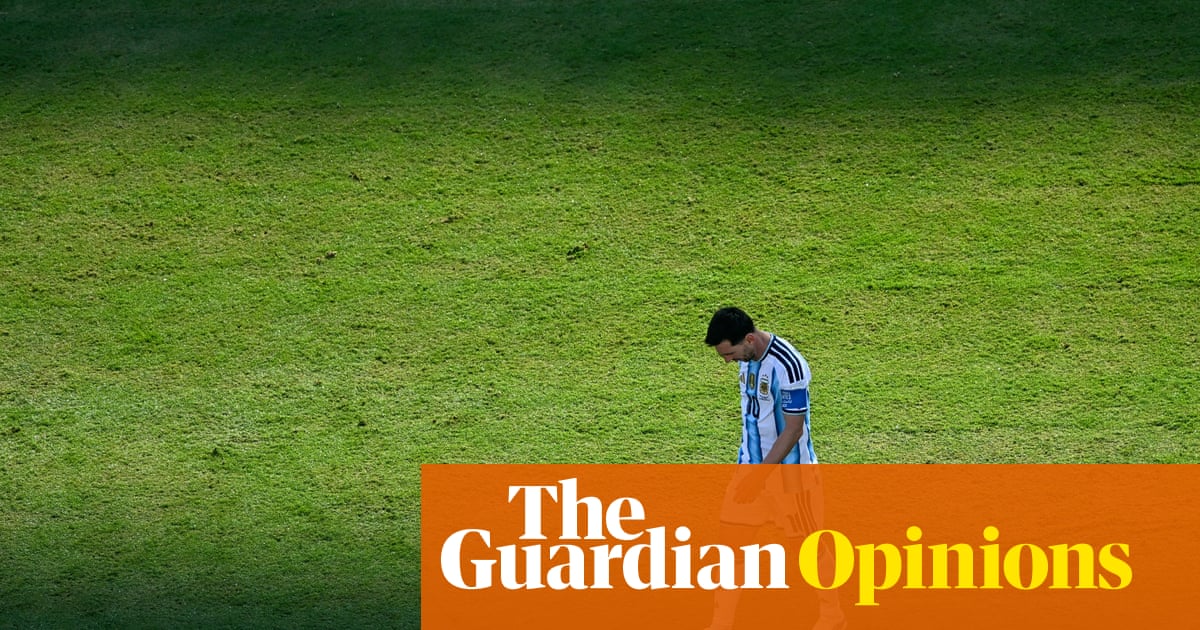
Beyond the Pitch: Why Black America Viewed the 2026 World Cup Final Through a Lens of Social Justice
Guardian Football·July 22, 2026
As a journalist covering the FIFA World Cup 2026 across North America, I’ve witnessed firsthand how this tournament has evolved far beyond tactical formations and spectacular goals. On the surface, Sunday’s colossal final between Spain and Argentina appeared to be a straightforward clash of two international footballing titans. However, as Etan Thomas highlighted in a striking piece for the Guardian, the narrative in the stands—and in living rooms across the United States—was deeply personal and incredibly complex.
For many Black Americans, this World Cup final was not just a game; it was a referendum on values.
As Thomas astutely observed, modern sports fandom has shifted. Today, spectators are scrutinizing far more than the scoreboard. They are evaluating the moral compass of the players, the nations they represent, and the historical weight they carry. To ignore the dark chapters of history—colonization, oppression, and systemic racism—simply because a team plays beautiful football is a luxury many fans are no longer willing to afford.
It is crucial to understand the nuance here: the Black American stance wasn't necessarily a blind endorsement of Spain, a nation with its own deeply fraught history of colonization. Rather, as Thomas points out, the collective cheers heard across Black communities in the US were explicitly rooted in wanting to see Argentina defeated.
Why? The answer lies in the intersection of racism, politics, and profound silence. Throughout the 2026 tournament, Argentina's fanbase and the nation's broader political rhetoric became impossible to separate from the action on the pitch. From deeply troubling chants to a political climate that many view as hostile to marginalized communities, Argentina became a lightning rod for cultural frustrations. When institutions and fans stay silent in the face of discrimination, that silence speaks volumes. It broadcasts a message of complicity.
During my time covering the tournament in the host cities, I spoke with countless fans who echoed these exact sentiments. They viewed the final not just as an athletic contest, but as a microcosm of the ongoing global fight for equity. For them, football cannot be divorced from the socio-political realities of the countries competing.
Ultimately, the 2026 World Cup will be remembered not only for its historic scale and unforgettable moments of brilliance, but for how it forced the world to confront uncomfortable truths. As Etan Thomas reminds us in the Guardian, sports will always mirror society. The game is only a small part of the story—the real battle lies in the values we choose to champion, and the injustices we refuse to silently accept.
🔥 Discover More World Cup Content
Sponsored
Related News
MLS Opens Tampering Investigation Into Inter Miami Following Blockbuster Casemiro Signing
BBC Sport · Jul 22
World Cup 2026: England's Richardson Aims for Ultimate Glory After Dramatic Australia Switch
Sky Sports · Jul 22
Post-World Cup Pivot: The Serie A Future Awaits Canada's Dynamic Duo
Football Italia · Jul 22