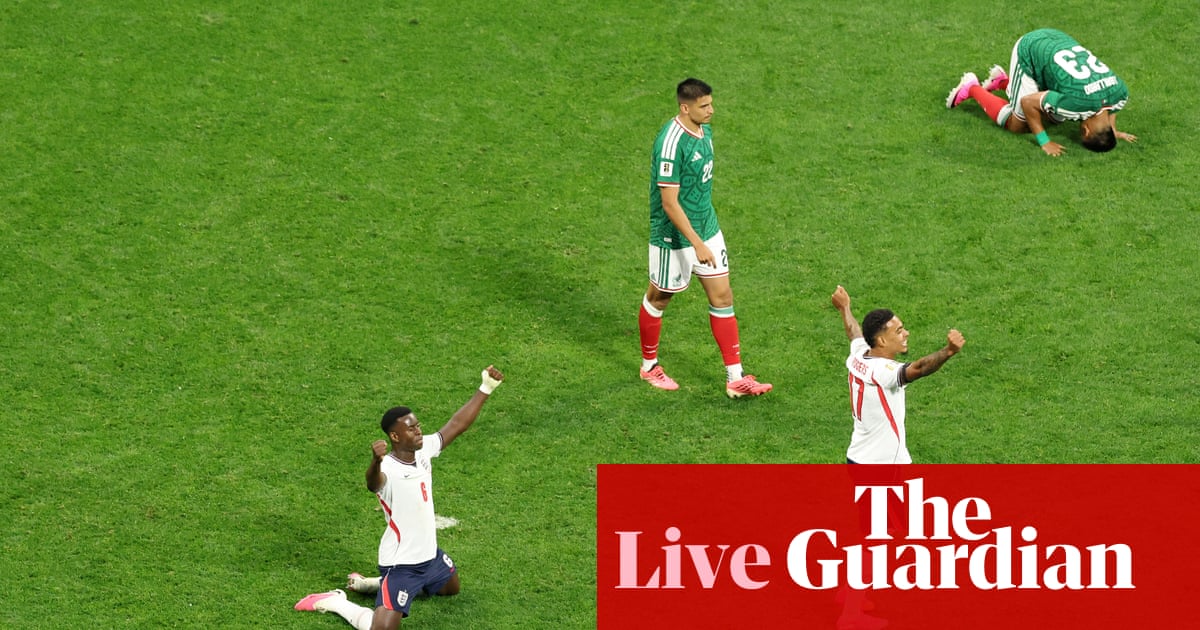
England Edge Mexico in Classic as 'Balogun-gate' Sparks FIFA-UEFA Row
Guardian Football·July 6, 2026
The 2026 FIFA World Cup is delivering unforgettable drama, both on and off the pitch. As the Round of 16 unfolds, fans are being treated to spectacular football marred by an unprecedented political storm that threatens to overshadow the tournament.
On the grass, England secured their place in the quarter-finals after surviving an absolute thriller against Mexico. The Three Lions edged out a fiercely competitive Mexican side 3-2 in a captivating, end-to-end battle that kept supporters on the edge of their seats until the final whistle. England’s reward is a highly anticipated showdown with Norway, setting the stage for what promises to be a blockbuster quarter-final.
However, the breathtaking action on the field is currently being completely eclipsed by an escalating off-field scandal quickly dubbed 'Balogun-gate'. According to reports from Guardian Football, the Belgian Football Association—and a massive proportion of the global football community—has been left utterly 'astonished' by FIFA's shock decision to reverse a suspension handed to striker Folarin Balogun.
Balogun was initially shown a red card and handed an automatic ban during his team's victory over Bosnia and Herzegovina. Yet, in a move that has sent shockwaves through the sport, FIFA wiped the slate clean, declaring him eligible for a crucial last-16 tie against Belgium.
The reasoning behind this sudden reversal is where the controversy truly ignites. Sources have revealed to the Guardian that former U.S. President Donald Trump made three separate phone calls to FIFA—starting as early as Wednesday—specifically to pressure the governing body into clearing the player.
This blatant political interference has provoked a furious response from European football's governing body. UEFA has publicly accused FIFA of 'crossing a red line,' suggesting that allowing external political figures to dictate sporting disciplinary outcomes severely compromises the integrity of the game. The Belgian camp's outrage is entirely justified, as they are now forced to face a strengthened opponent whose inclusion in the tie defied standard regulatory protocols.
As the knockout stages heat up, the beautiful game finds itself at a dangerous crossroads. Will the gripping on-field narratives, like England's exhilarating march through the brackets, manage to shine through? Or will the turbulent intersection of global politics and football governance permanently stain the 2026 World Cup? One thing is for certain: all eyes will be on both the quarter-final pitch and the FIFA boardroom.
🔥 Discover More World Cup Content
Sponsored
Related News
Gunners Secure German Striker Cerci in Masterstroke Free Transfer
BBC Sport · Jul 6
FIFA Under Fire: UEFA Slams 'Red Line' Crossing Over Balogun's Shock World Cup Inclusion
Sky Sports · Jul 6
Tonali Takes the Reins: Tottenham Confirms Italy Maestro's Squad Number Ahead of World Cup 2026
Football Italia · Jul 6