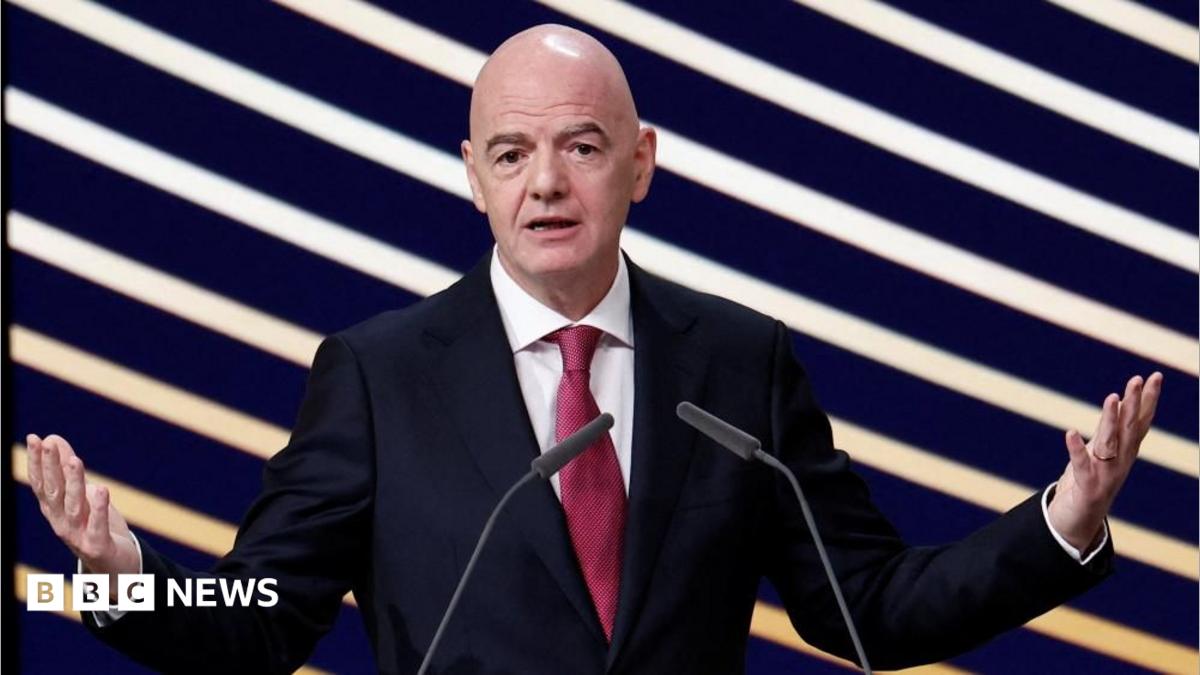
FIFA's World Cup Privatization Pipe Dream: Four Reasons the Masterplan Crumbled
BBC Sport·August 1, 2026
As the football world eagerly anticipates the expanded, 48-team spectacle of the 2026 World Cup across North America, FIFA's recent ambition to part-privatize the tournament has officially hit a wall. Originally pitched as a revolutionary financial masterstroke designed to secure the future of the global game, the proposal to sell a stake in the tournament's commercial rights to private investors has ultimately failed to materialize. But why exactly did Gianni Infantino's grand plan fail to cross the line?
According to an in-depth analysis by BBC Sport, the actual presentation of FIFA's strategy raised far more questions than it answered. Here are the four core reasons why the part-privatization plan never truly stacked up.
First, there is the glaring issue of financial transparency. Private equity firms and sovereign wealth funds demand rigorous, clear-cut financial forecasting before committing billions. However, FIFA's complex web of broadcast rights, sponsorship tiers, and ticketing revenues proved too murky. Investors were reportedly spooked by the lack of clarity regarding how profits would actually be extracted and distributed, making a multi-billion-dollar buy-in an incredibly tough pill to swallow.
Second, the inevitable conflicts of interest proved to be a massive stumbling block. Handing over a slice of the World Cup’s commercial arm to private investors means handing over a degree of operational control. Football fans and governing bodies alike shuddered at the thought of Wall Street firms dictating kickoff times, tournament formats, or venue selections purely to maximize prime-time television ratings and advertising revenues.
Third, there is the profound risk of brand devaluation. The World Cup is the crown jewel of global football, celebrated for its raw passion, international unity, and historic prestige. Wrapping it in the sterile language of hedge funds and corporate buyouts threatened to alienate the very lifeblood of the sport: the supporters. FIFA quietly realized that the public relations nightmare of "selling out" football's greatest festival wasn't worth the immediate short-term cash windfall.
Finally, a distinct lack of consensus among football's key stakeholders served as the ultimate nail in the coffin. Domestic leagues, clubs, and national federations already operate on a knife-edge regarding financial distribution. Introducing external investors at the very top of the pyramid meant slicing the financial pie into even thinner pieces. The inevitable backlash from these stakeholders—who feared their own revenues would be cannibalized to ensure returns for private backers—was too fierce to overcome.
Ultimately, while the 2026 World Cup promises to be a record-breaking financial juggernaut, it will do so under FIFA's solitary control. The part-privatization dream was just that—a dream. For now, the beautiful game remains off the market.
🔥 Discover More World Cup Content
Sponsored
Related News
Guarding the Beautiful Game: How UEFA’s Revolt Shielded Women’s Football from FIFA's Corporate Selloff
Guardian Football · Aug 1
FIFA in Turmoil: UEFA Revolts Against Infantino's 'Secret Schemes' Ahead of 2026 World Cup
Guardian Football · Aug 1
Azzurri Mourn an Icon: Italian Media Unites in Emotional Tribute to Franco Baresi
Football Italia · Aug 1