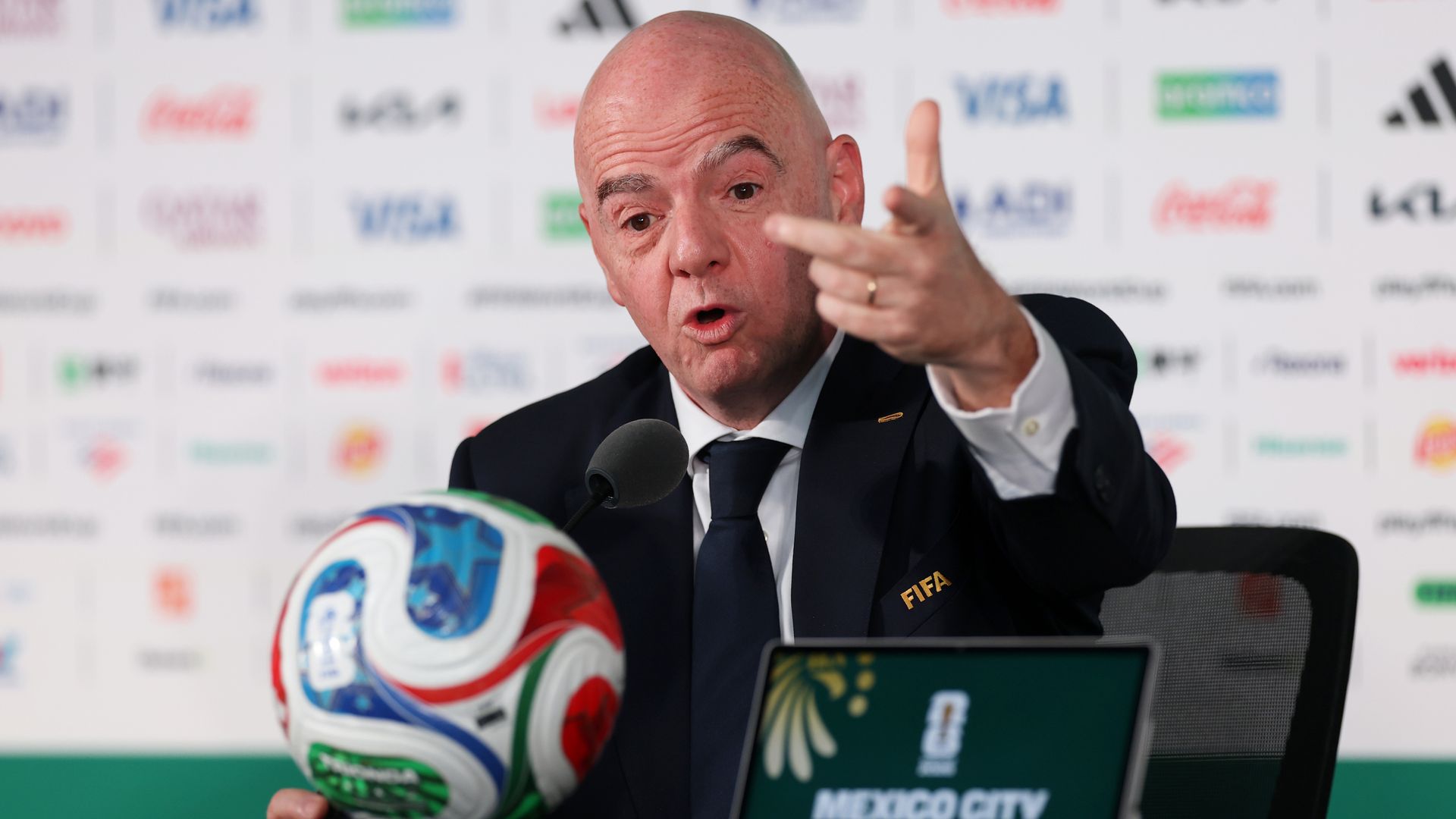
From 48 to 64? Infantino Teases Massive Expansion for the 2030 World Cup
Sky Sports·July 12, 2026
As we gear up for the monumental 48-team spectacle set to take over North America in 2026, FIFA President Gianni Infantino has already dropped a bombshell regarding the 2030 edition. According to Sky Sports, football’s governing body is contemplating a further expansion, potentially ballooning the World Cup to an unprecedented 64 teams.
The proposed mega-tournament would mark yet another seismic shift in the global game. While the footballing world is still bracing for the impact of the new 48-team format debuting across the United States, Canada, and Mexico, Infantino’s latest musings suggest that FIFA's appetite for global inclusion shows no signs of slowing down.
From a purely structural standpoint, a 64-team World Cup actually creates a mathematically clean tournament. It would allow for a traditional, straight-forward knockout bracket. If implemented, the tournament could feature 16 groups of four teams, with the top two from each group advancing to a massive Round of 32. This format would eliminate the awkward, convoluted third-place advancement rules that will be trialed in 2026.
The timing of this revelation is particularly intriguing. The 2030 World Cup is already slated to be a historic, transcontinental affair celebrating the centenary of the inaugural tournament. With co-hosts spanning Spain, Portugal, Morocco, Uruguay, Argentina, and Paraguay, the infrastructure will already be stretched to its absolute limits. Adding 16 more teams to that logistical puzzle will undoubtedly raise eyebrows among organizers and player welfare advocates alike.
Naturally, the news has sparked intense debate throughout the footballing world. Purists argue that continuously inflating the tournament risks diluting the overall quality of play, warning of potential lopsided, uncompetitive group-stage matchups. Conversely, advocates view this as a necessary evolution. A 64-team field would open the doors for emerging footballing nations, offering them a golden ticket to football's grandest stage and injecting fresh tactical flavors into the mix.
As a journalist on the ground covering the road to 2026, one thing is abundantly clear: the landscape of international football is evolving at a breakneck pace. Whether the 2030 tournament ultimately features 48 or 64 nations remains to be seen, but the era of the exclusive, compact World Cup is firmly in the rearview mirror.
🔥 Discover More World Cup Content
Sponsored