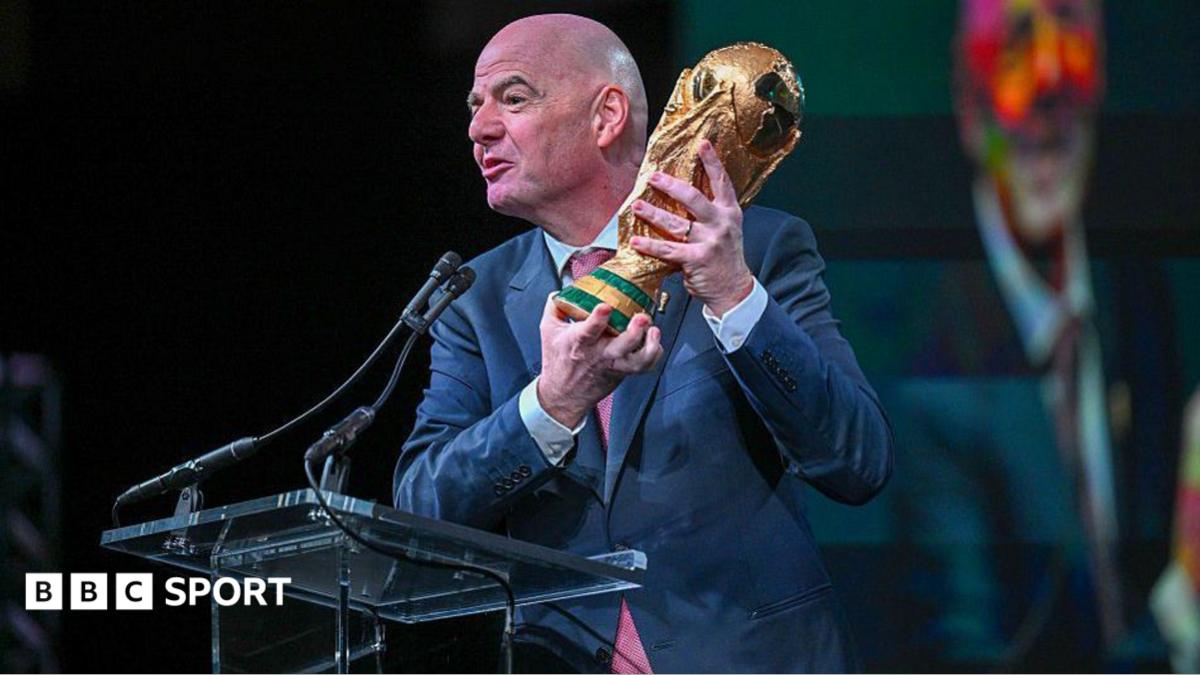
Infantino’s Insatiable Appetite: Is a 64-Team World Cup on the Horizon?
BBC Sport·July 20, 2026
Welcome to the era of super-sized soccer. Just as fans, players, and federations are bracing for the expanded 48-team format arriving at the 2026 World Cup across North America, FIFA President Gianni Infantino is already floating an even bolder, more controversial idea. According to BBC Sport, the administrator could be looking to balloon the historic tournament to an unprecedented 64 teams.
If we have learned absolutely anything during Infantino’s tenure at the helm of global football’s governing body, it is his unshakeable belief that 'more is inevitably better.' More teams, more matches, and, crucially, more revenue. But does a 64-team World Cup dilute the quality of the globe's greatest sporting spectacle, or does it successfully democratize the beautiful game for emerging nations?
When the opening whistle blows across the United States, Mexico, and Canada in 2026, it will mark a historic shift as 48 nations compete for global glory. That structural overhaul was already met with fierce debate regarding fixture congestion, player fatigue, and competitive integrity. Yet, true to form, Infantino appears unsatisfied with the status quo. A 64-team bracket would essentially turn the World Cup into a mirror of the wildly popular NCAA 'March Madness' basketball tournament—a format highly lucrative in the US market, which remains a massive commercial growth opportunity for FIFA.
For smaller federations and underdog nations, this potential expansion is a dream scenario. It offers a realistic pathway to the sport's grandest stage, fostering global grassroots growth and creating genuine Cinderella stories. However, football purists and elite domestic leagues are already groaning at the prospect. Critics argue that an overstuffed tournament could lead to lopsided, unwatchable group-stage mismatches. Furthermore, it threatens to further saturate an already congested football calendar, pushing elite players to their absolute physical limits.
Ultimately, championing a 64-team World Cup would be a classic Infantino power play. It guarantees extended broadcast rights, more ticket sales, and secures vital political goodwill from the regional confederations who would suddenly find World Cup qualification a relative breeze. As the football world turns its eyes toward the 2026 tournament, the shadow of an even larger format looms large. Whether this relentless expansion elevates the global game or alienates its core fanbase remains the ultimate billion-dollar question.
🔥 Discover More World Cup Content
Sponsored
Related News
World Cup 2026 Watch: Man Utd and Roma Engage in High-Stakes €60m Talks for French Midfielder Manu Kone
Football Italia · Jul 20
La Roja Roars: Madrid Erupts as Spain Celebrates 2026 World Cup Triumph
BBC Sport · Jul 20
Chaos on the Pitch: Argentina Stars Face Lengthy Bans After 2026 World Cup Final Brawl
Guardian Football · Jul 20