Spidercam Scandal or Fair Play? FIFA's High-Tech Sensors Solve England's World Cup Controversy
Sky Sports·July 12, 2026
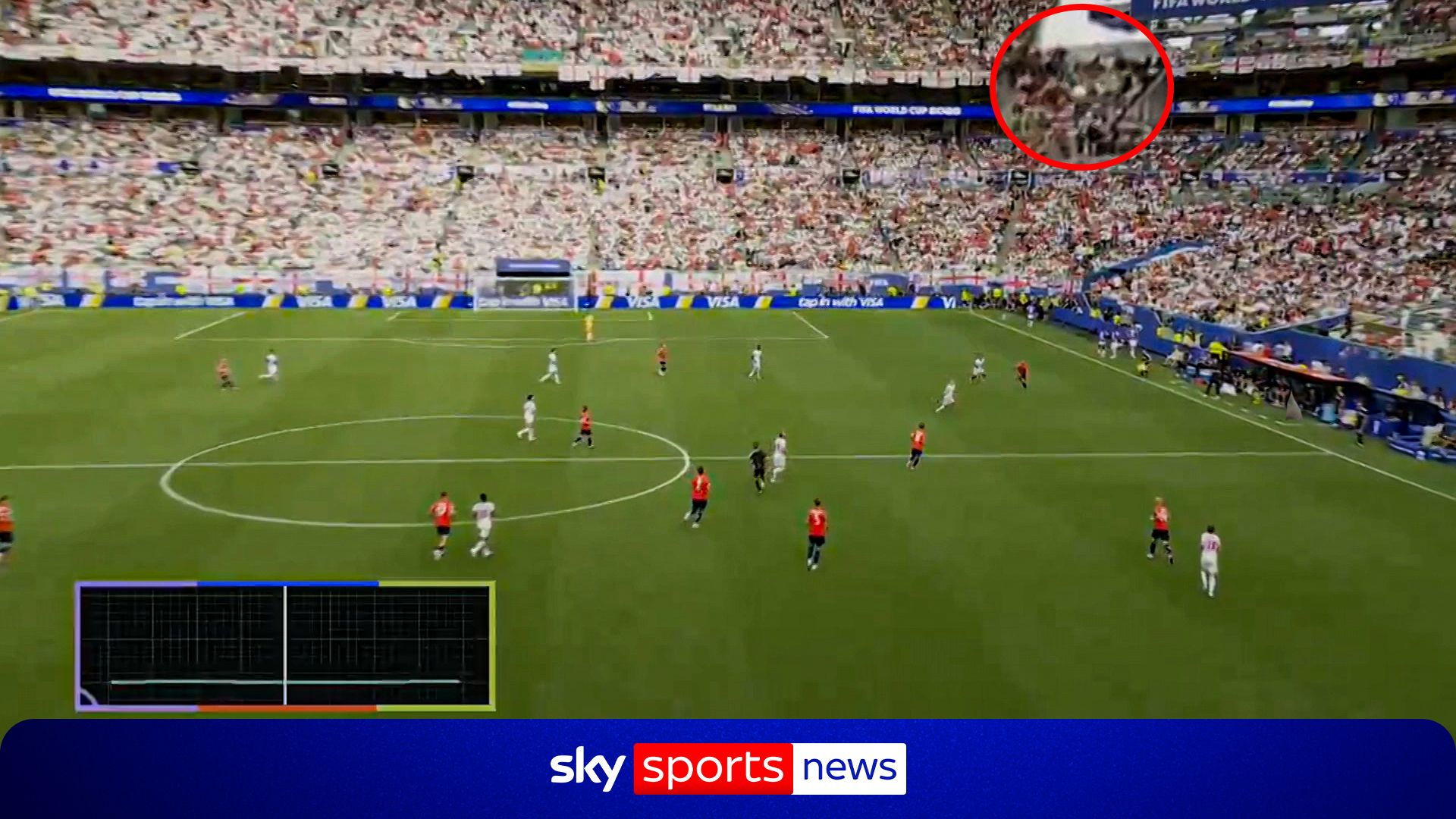
The atmosphere was electric, the tension palpable, as England pushed desperately for an equaliser in their crucial FIFA World Cup 2026 clash. When the ball ultimately rippled the back of the net, a nation erupted in celebration. However, the jubilation was almost immediately replaced by a whirlwind of speculation on social media and in the commentary boxes. Did the trajectory of the ball alter mid-flight? Were the sharp-eyed fans correct in suspecting that the ball had clipped the Spidercam cable hovering above the pitch?
In modern football, where margins are razor-thin, such controversies can define a tournament. Enter FIFA's state-of-the-art sensor technology. As reported by Sky Sports, the governing body utilized its latest high-tech ball-tracking systems to definitively solve the mystery and provide a concrete answer to the raging debate.
The footage, originally highlighted by Sky Sports, prompted intense scrutiny. Critics and rival fans argued that any contact with the suspended camera wire should have automatically nullified the play, resulting in a dead-ball situation. The laws of the game are clear: if the ball makes contact with an external agent, the match must be halted. But with millions watching and tournament progression on the line, only empirical data could separate fact from fiction.
FIFA's advanced sensor system, which is seamlessly embedded within the official match ball, provides real-time data on every touch, spin rate, and trajectory change. This technology, originally introduced to assist VAR with offside decisions, has been heavily upgraded for the 2026 tournament to capture incredibly precise kinetic feedback. The sensors essentially act as an unbiased digital eyewitness, cutting through the noise of partisan debates.
Upon reviewing the digital telemetry, the results were conclusive. The data revealed exactly what happened in the split second before the historic goal. The high-frequency sensors did not register any anomalous deflection or micro-impact consistent with striking a stationary cable. The ball's spin and speed remained perfectly consistent with a standard, uninterrupted strike, effectively debunking the Spidercam conspiracy theory and confirming that England's equaliser was entirely legitimate.
This incident serves as a testament to the evolution of the beautiful game. While traditionalists may occasionally lament the intrusion of technology into football, moments like this prove its undeniable value in ensuring fairness. FIFA's sensor system not only protected the integrity of the match but also preserved the magic of a crucial World Cup moment. As the 2026 tournament continues to deliver unforgettable drama, fans can take comfort in knowing that the technology operating above and within the ball is working tirelessly to ensure the right calls are made.
🔥 Discover More World Cup Content
Sponsored
Related News
Scottish Football Spotlight: Falkirk's Ascent and the Road to the 2026 World Cup
BBC Sport · Jul 12
Paz Under Pressure: Argentina Survive Swiss Scare to Reach World Cup 2026 Semis
Football Italia · Jul 12
The Unstoppable Force: Why France Leads the 2026 World Cup Power Rankings
Guardian Football · Jul 12