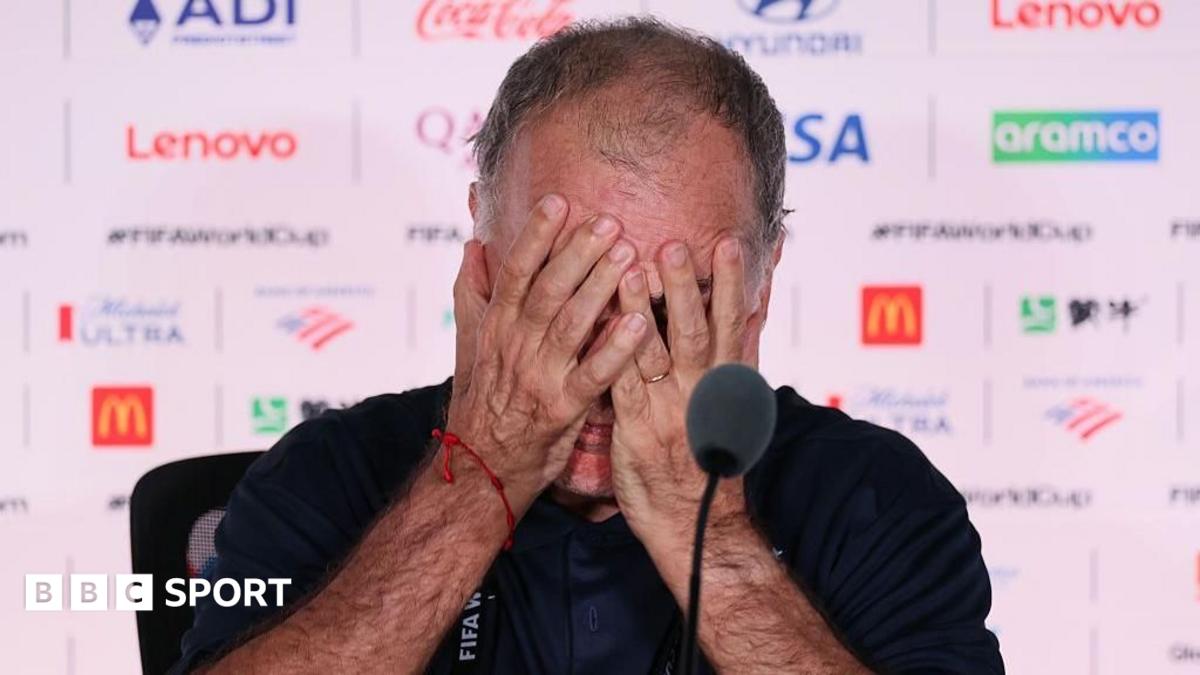
The End of the Line: How Bielsa's 'Toxic' Era Culminated in Uruguay's World Cup Heartbreak
BBC Sport·June 27, 2026
The dust is beginning to settle across North America following Uruguay’s shocking elimination from the 2026 FIFA World Cup, but the fallout in Montevideo is only just beginning. As reported by BBC Sport, the tournament marks the definitive, unceremonious end of Marcelo Bielsa’s turbulent reign as head coach of La Celeste. It is a conclusion perfectly summarized by the Argentine manager’s own somber, fatalistic reflection: 'I leave nothing.'
When Bielsa first took the helm, expectations were sky-high. Renowned for his tactical genius and relentless, high-octane pressing system, 'El Loco' was viewed as the perfect catalyst to maximize a golden generation of Uruguayan talent featuring the likes of Federico Valverde, Darwin Nunez, and Ronald Araujo. Early in his tenure, the marriage of Bielsa’s intense philosophy with Uruguay's gritty tradition seemed destined for international glory. Yet, as BBC Sport highlights, that dream rapidly deteriorated into a fractured, 'toxic' environment.
The unravelling of Uruguay's 2026 campaign was not born from a lack of effort or tactical ignorance, but rather from a complete collapse in squad morale. Bielsa’s notoriously demanding methods, obsessive attention to microscopic details, and strict isolationist approach to man-management slowly alienated his players. What was once hailed as intense dedication quickly morphed into an oppressive atmosphere. Reports from inside the camp suggested players were suffocated by the rigid, machine-like expectations, stripped of their natural creative freedoms and pushed to the brink of physical and mental exhaustion.
During the World Cup, this toxicity manifested in sluggish, disconnected performances. La Celeste looked like a shadow of the dominant side that had initially intimidated their South American rivals. They lacked the famous Uruguayan 'garra'—the fierce, unyielding heart that has historically defined the nation's footballing identity. The early tournament exit wasn't a surprise to those who tracked the internal decay; it was the inevitable breaking point of a relationship that had turned rancid.
Ultimately, Bielsa leaves the Uruguayan Football Association with a haunting sense of emptiness. His tactical blueprint, while aesthetically pleasing in isolation, proved too rigid and uncompromising for the modern international stage. As Uruguay looks to the post-2026 landscape, they are left to pick up the pieces of a broken project. The Bielsa era serves as a stark reminder that footballing brilliance is nothing without emotional intelligence and the willing buy-in of the players.
🔥 Discover More World Cup Content
Sponsored
Related News
Three Lions Roar Peacefully: England Fans Earn Top Marks in USA, But Home Front Sees Uptick in Trouble
BBC Sport · Jun 30
Knockout Chaos: France and Mbappe Clash with Sweden in World Cup 2026 Round of 32
Guardian Football · Jun 30
Milan Masterstroke: Goncalo Ramos' £60m Move Sets Stage for World Cup 2026
BBC Sport · Jun 30