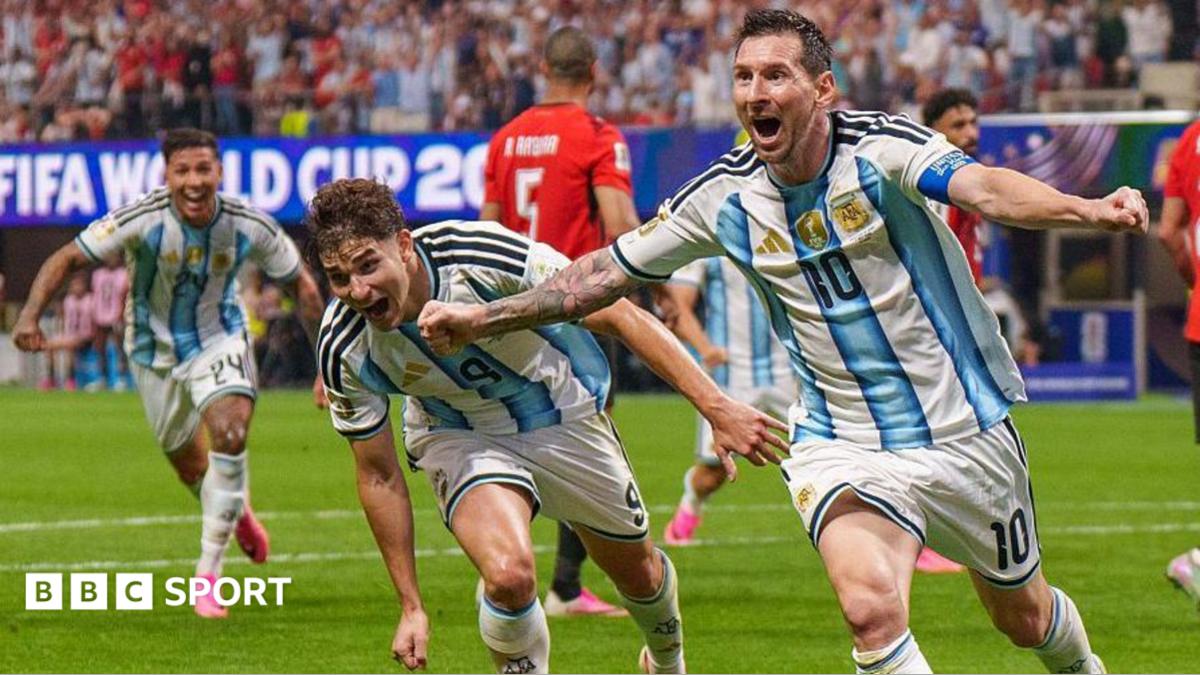
The Messi Privilege? Egypt Ignites Refereeing Controversy at World Cup 2026
BBC Sport·July 17, 2026
The 2026 FIFA World Cup, a historic tournament co-hosted by the United States, Canada, and Mexico, is supposed to be a celebration of football's global expansion. Yet, barely a few weeks into the competition, a massive shadow has been cast over the beautiful game. The Egyptian national team has sparked a firestorm by publicly alleging a systemic bias in favor of reigning champions Argentina. At the absolute center of this brewing scandal is none other than Lionel Messi.
According to a recent report by BBC Sport, the Egyptian camp is furious, suggesting that match officials are showing an unacceptable level of favoritism toward La Albiceleste. The Pharaohs' frustrations have seemingly reached a boiling point, with team officials insinuating that the legendary forward is receiving unprecedented protection from referees. They argue that the slightest physical contact near the eight-time Ballon d'Or winner is heavily penalized, making it virtually impossible for defenders to play their natural game.
This explosive allegation strikes at the heart of football’s most enduring and toxic debate: the so-called "superstar privilege." When a generational talent like Messi is on the pitch, defenders are frequently caught in a psychological Catch-22. Make a legitimate, hard tackle, and you risk a booking; back off, and you concede the play. Egypt’s complaints echo a familiar sentiment among opposing nations—facing Argentina feels like playing against twelve men, with the twelfth being the man with the whistle.
However, critics of Egypt’s claims point out that defending World Cup champions naturally carry an intimidating aura. Teams often play with a hesitation born of deep respect when facing a titan of the sport. Is this a genuine refereeing conspiracy, or simply the bitter residue of a devastatingly close match? Former officials and pundits have largely dismissed the idea of an institutional bias, suggesting that high-profile players draw more fouls simply because of their tactical gravity and unmatched agility on the ball.
Regardless of where the truth lies, the narrative has been firmly established. As the 2026 tournament heads into the knockout rounds, the spotlight will remain harshly fixed on the officials every time Messi touches the grass. Every free kick awarded to Argentina will now be met with immediate scrutiny and endless replays. FIFA has yet to issue a formal response to Egypt's grievances, but the damage to the tournament's optics is already done. As highlighted by BBC Sport, the debate over whether Argentina is receiving a favorable rub of the green will rage on in stadiums and studios alike until the coveted trophy is finally lifted.
🔥 Discover More World Cup Content
Sponsored