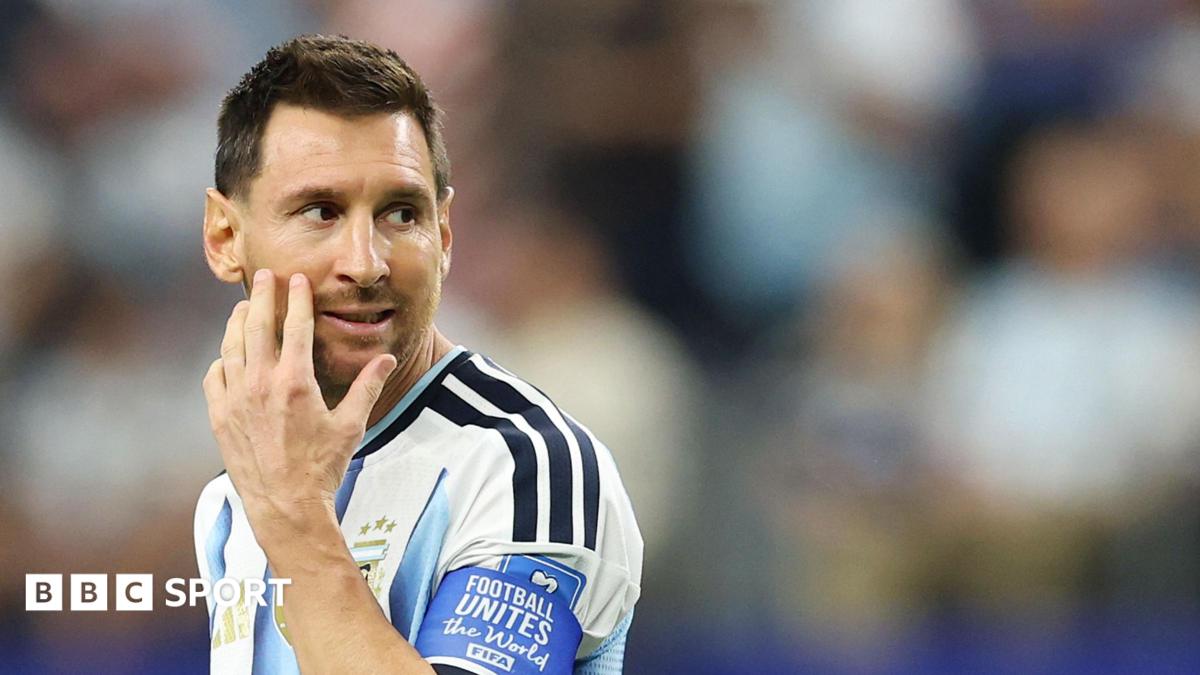
The Spot-Kick Dilemma: Should Messi Pass the Penalty Torch for Argentina?
BBC Sport·July 11, 2026
As the FIFA World Cup 2026 unfolds across North America, Lionel Messi continues to defy Father Time, adding yet another glorious chapter to his legendary career. However, amidst the brilliance of his tournament so far, a familiar ghost has returned to haunt the Argentine captain: the penalty spot. According to BBC Sport, after his latest high-profile miss from twelve yards, a massive tactical debate has erupted among fans and pundits alike: should Lionel Scaloni and Argentina relieve their greatest ever player of penalty duties?
It feels almost sacrilegious to question the eight-time Ballon d'Or winner. After all, we are talking about a footballing deity who led La Albiceleste to World Cup glory in Qatar just four years ago. Yet, at the elite level of international football, margins for error are razor-thin. Messi’s recent miss wasn't just a statistical blip; it highlighted a growing, undeniable vulnerability from the spot during high-stakes, must-win knockout matches.
In the intense cauldron of a World Cup, converting a penalty is as much about psychological warfare as it is about technical execution. Goalkeepers at the 2026 tournament have heavily scouted Messi's trademark stutter-step approach. Waiting for the keeper to commit before stroking the ball into the opposite corner is a strategy that has served him brilliantly for over a decade, but it leaves zero margin for error. If the strike lacks sufficient pace, or if the keeper reads the hesitation correctly, the result is a heart-stopping save. Squandering these golden opportunities to pad a lead or equalize puts immense, unnecessary pressure on the rest of the Argentine squad.
Fortunately for Argentina, their golden generation is brimming with elite talent perfectly capable of stepping up. Clinical strikers like Julián Álvarez and Lautaro Martínez possess pure ice in their veins, while midfield generals such as Leandro Paredes are renowned for their absolute composure under pressure. Passing the penalty baton to one of these trusted lieutenants could be a strategic masterstroke for Scaloni.
Relieving Messi of this specific burden might actually unlock an even higher level of performance from the 38-year-old. Without the looming mental weight of a potential spot-kick hanging over his head, Messi could conserve his fading energy and focus entirely on orchestrating open play, threading defense-splitting passes, and weaving his magic in the final third. Furthermore, taking him off penalties would immediately rob opposition defenders of a psychological edge—currently, fouling an Argentine player inside the box is no longer an automatic death sentence.
Removing Messi from penalty duties is a delicate, ego-bruising conversation that requires impeccable man-management from the Argentine coaching staff. However, if La Albiceleste are to successfully defend their crown, pragmatism must ultimately override sentimentality. Even for a player widely considered the greatest of all time, passing the spot-kick torch might just be the ultimate, selfless team-first sacrifice.
🔥 Discover More World Cup Content
Sponsored
Related News
Beyond the Pitch: The Intimate Pre-Match Rituals of World Cup 2026 Stars
Guardian Football · Jul 11
The Azzurri's Architect: Italy Holds its Breath as Maldini Weighs Crucial FIGC Role
Football Italia · Jul 11
The Maestro Reborn: Jude Bellingham Reclaims England's Heart at the 2026 World Cup
BBC Sport · Jul 11