The Spot-Kick Stalemate: Is It Time to Ban the 'Stutter' Penalty at the World Cup?
BBC Sport·July 10, 2026
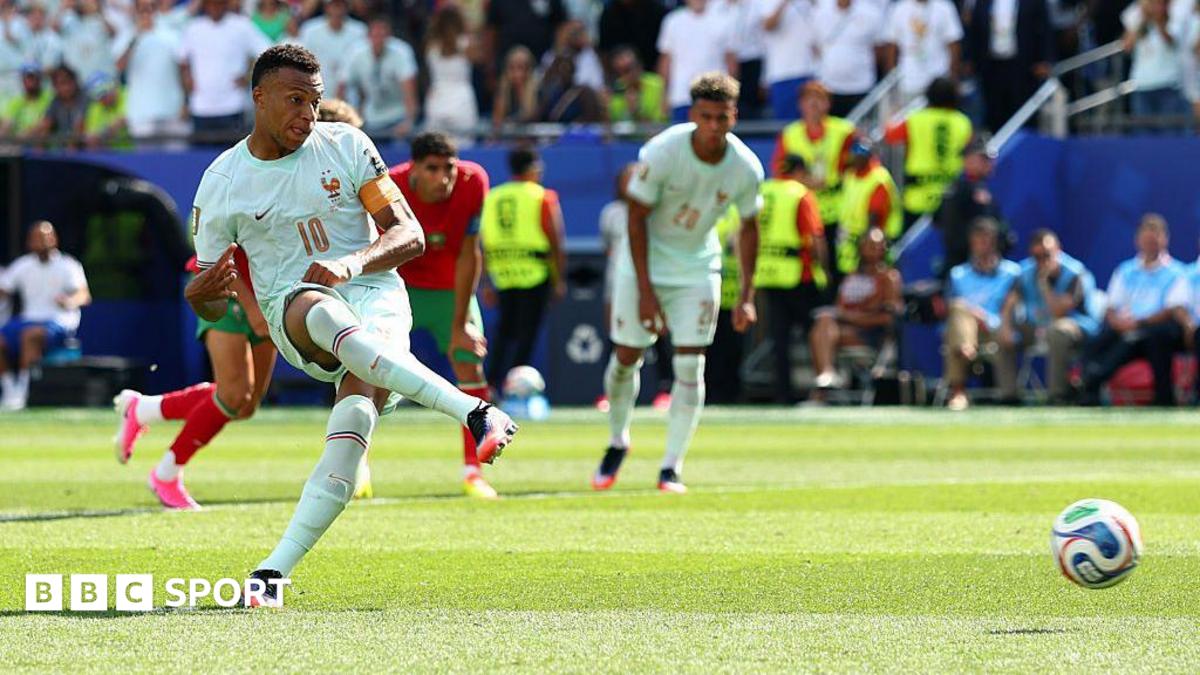
As the FIFA World Cup 2026 unfolds across North America, a familiar yet highly contentious debate has resurfaced on the grandest stage in sports: the fate of the 'stutter' penalty kick. According to BBC Sport, the conversation was reignited recently, drawing heavy parallels to Kylian Mbappe’s high-profile penalty miss in France's victory over Morocco. That infamous spot-kick remains a prime example of the stutter run-up backfiring spectacularly, and it has paved the way for a fierce modern debate regarding the psychology of the twelve-yard strike.
For the uninitiated, the stutter penalty—often dubbed the 'Jorginho hop'—involves a player breaking their stride and unbalancing their run-up just before striking the ball. The objective is simple: wait for the goalkeeper to commit to a dive, leaving the net wide open for a relatively simple finish. However, as we have seen repeatedly during the group stages of this expanded 48-team tournament, this psychological game of chicken is a dangerous double-edged sword.
Instead of fooling the keeper, the stutter frequently disrupts the striker's own mechanics. Modern goalkeepers at the 2026 World Cup are taller, faster, and far more composed than in previous decades. By holding their ground and refusing to dive early, keepers are essentially calling the bluff of the penalty taker. When a striker halts their forward momentum, they are left to strike a dead-weight ball under immense pressure. The result is often a weak, saveable shot, or worse, a complete shank into the stands.
The statistics are becoming too glaring to ignore. As BBC Sport highlighted, an increasing number of players are wasting crucial opportunities from the spot after adopting this fragmented approach. Currently, the International Football Association Board (IFAB) states that feinting in the run-up is permitted, provided the player does not completely stop. Yet, football purists and veteran pundits are growing increasingly frustrated with the spectacle. Many argue that the stutter ruins the natural rhythm of the game and heavily penalizes attacking flair. Instead of a moment of pure, unadulterated striking technique, penalties are devolving into awkward, truncated dance routines.
So, should football's governing bodies step in to ban the stutter entirely? Some critics argue it borders on unsportsmanlike conduct, suggesting that a penalty kick should be a test of striking power and accuracy rather than a deceptive trick. Others maintain that if a player is willing to risk humiliation to gain a marginal advantage, they should be allowed to do so.
Ultimately, the penalty shootout remains the most dramatic, pulse-pounding spectacle in sports. However, as the knockout rounds of the 2026 World Cup loom, the pressure will only intensify. If history is any indication, the smartest managers and most clinical forwards will likely abandon the mind games, ditch the stutter, and return to the thunderous, old-school blast into the top corner. When the weight of a nation rests on your shoulders, overthinking is the ultimate enemy.
🔥 Discover More World Cup Content
Sponsored
Related News
Les Bleus on the Brink: Are We Witnessing France's Greatest Ever World Cup Squad?
BBC Sport · Jul 10
Les Bleus March On: France Edges Morocco 2-0 in Tense World Cup 2026 Clash
Sky Sports · Jul 10
Haaland Turns Up the Heat: 'The Pressure is All on England' Ahead of World Cup Quarter-Final
Guardian Football · Jul 10