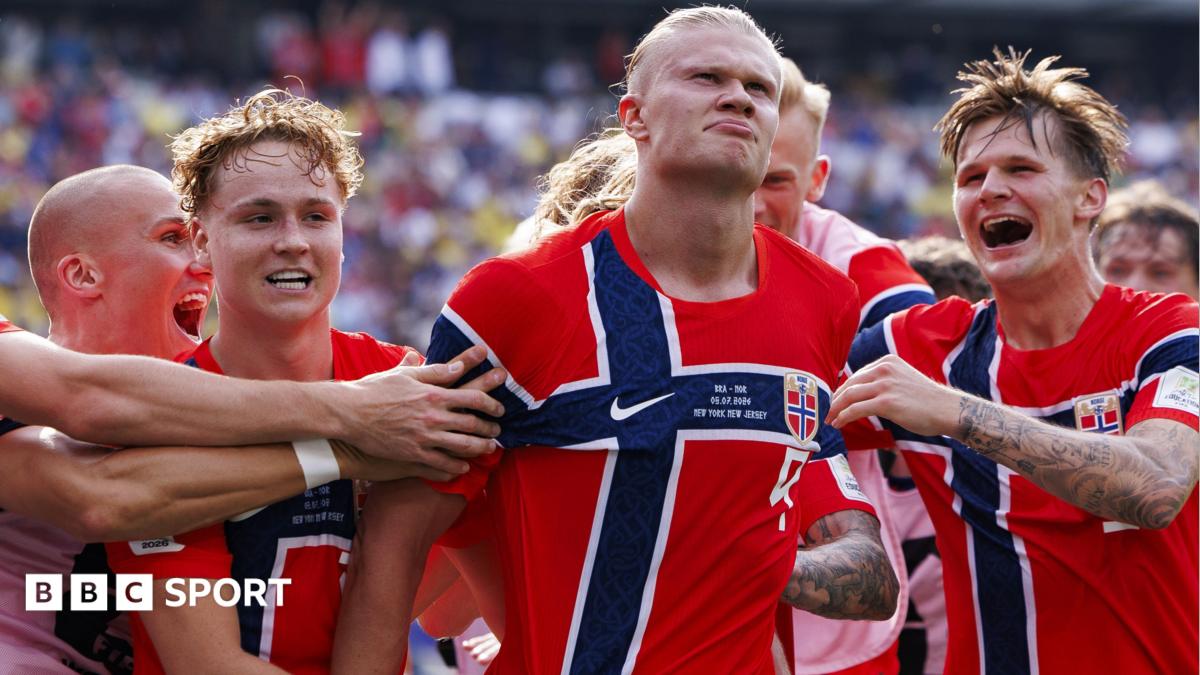
Viking Spirit: What Scotland Must Learn from Norway's Historic 2026 World Cup Run
BBC Sport·July 7, 2026
The 2026 FIFA World Cup has delivered its fair share of fairy tales, but few are as captivating as Norway’s historic march to the quarter-finals. As reported by BBC Sport, this monumental achievement by a nation with a population comparable to Scotland’s has ignited a fierce debate north of the border: if Norway can conquer the global stage, why can't the Tartan Army?
For decades, Scotland has carried the heavy weight of expectancy, often coupled with the heartbreak of agonizing near misses. Watching the Norwegian squad tear through the tournament's established elite has been both inspiring and deeply frustrating for Scottish supporters. Both nations share a profound, almost religious devotion to the beautiful game, yet it is Norway who has finally cracked the code of progressing deep into a major tournament.
So, what exactly can Scotland learn from their neighbors across the North Sea? First and foremost is the meticulous cultivation of elite talent. Norway has successfully built a modern, dynamic system that maximizes the output of its generational talents. Rather than relying solely on individual moments of magic, the Norwegian coaching staff has forged a cohesive, resilient collective. They have demonstrated that a smaller footballing nation can punch well above its weight by combining technical precision with a pragmatic, almost impenetrable defensive structure.
Furthermore, Norway’s youth development pipeline has been years in the making. They prioritized technical proficiency, tactical intelligence, and fearlessness from a young age, allowing their prospects to seamlessly transition into top-five European leagues. Scotland’s domestic development system, while deeply passionate and renowned for producing fierce competitors, must similarly evolve to prioritize technical nuance alongside traditional physical grit.
There is also a vital psychological lesson to be heeded. Historically, smaller nations often arrive at major tournaments appearing overwhelmed by the occasion. Norway, however, has played with a distinct fearlessness, backed by a tactical swagger that demands respect from traditional footballing superpowers. Scottish football has frequently suffered under the suffocating pressure of expectation at Hampden Park. Adopting Norway's underdog mentality—where the focus is on expressing talent rather than fearing failure—could be the final puzzle piece Scotland needs.
As the 2026 tournament reaches its climax and Norway prepares for the biggest match in their footballing history, the Scottish Football Association would be wise to take copious notes. The blueprint for small-nation success is right there. If the Vikings can storm the World Cup quarter-finals, the time for Scottish excuses is officially over.
🔥 Discover More World Cup Content
Sponsored
Related News
Milan Secure Transfer Agreement with Lazio for 'Gila' as Real Madrid Bank 50%
Football Italia · Jul 7
The Last Dance? Why Cristiano Ronaldo and Portugal Must Forge New Paths at the 2026 World Cup
Sky Sports · Jul 7
Knockout Drama Unfolds: Argentina and Egypt Ring the Changes for Last-16 Clash
Guardian Football · Jul 7